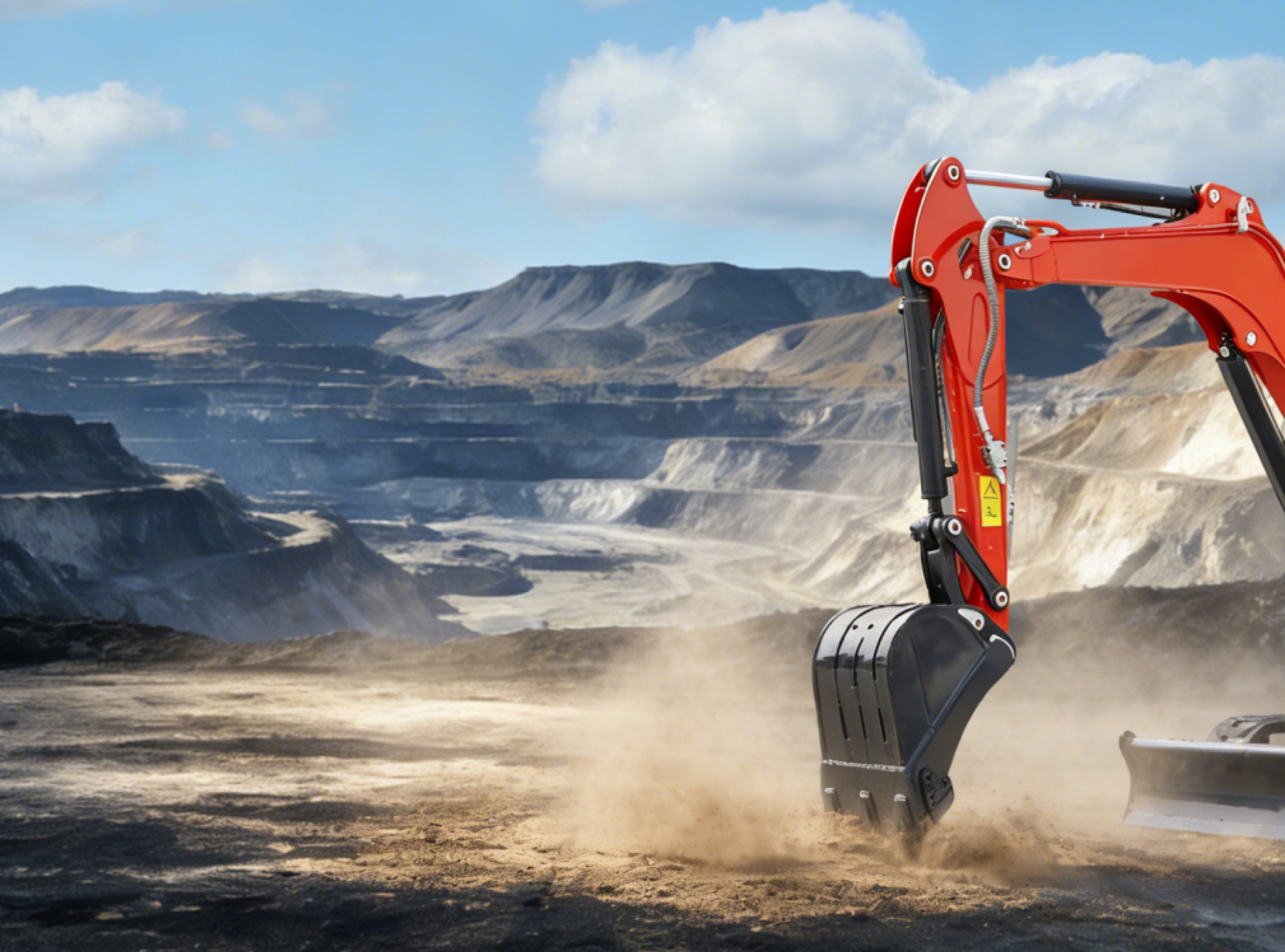
Short answer: A compact wheel loader moves loose material fast. Its core job is scooping soil, gravel, sand, and debris and loading it into trucks, hoppers, spreaders, or trenches. Around that core task sit eight common applications — construction and utility work, yards and depots, agriculture, landscaping, municipal service, winter maintenance, bulk light materials, and confined or rail-adjacent sites — each of which usually needs a different attachment rather than a different machine.
A loader is not a digging machine. It cannot dig very deep below the level of its wheels the way a backhoe or excavator can (Wikipedia — Loader (equipment)). That single limitation explains most bad machine choices: buyers expect excavation performance and get a material-handling tool.
What it is excellent at is the opposite: covering ground, carrying loads, and placing them precisely at height.
Loaders are used mainly for loading materials into trucks, laying pipe, clearing rubble, and light digging. In construction areas they also transport building materials — bricks, pipe, metal bars, and tools — over short distances (Wikipedia).
For material-handling work, operating capacity, lift height, and visibility are often the most important factors, because the operator must safely lift and place loads at the required height (Construction Equipment). This is the classic use case: a compact loader working a stockyard, builder's merchant, or recycling yard where a full-size loader is too large and a forklift lacks traction.
For aggregate, soil, and similar bulk materials, breakout force is a key performance indicator, because it directly affects how well the machine penetrates a pile and fills its bucket (Construction Equipment). For genuinely light materials — wood chip, peat, light gravel — a high-tip bucket is the right choice, especially when the bucket must be emptied from a height (Wikipedia).
Tractor-mounted and compact loaders handle a wide range of farm tasks using hydraulic grabs and spikes for bale and silage handling, forks for pallet work, and buckets for general farm duties. They are popular because of their relatively low cost compared with telehandlers and their high versatility (Wikipedia).
Compact machines with front buckets are standard equipment for grounds maintenance and landscaping chores, where narrow access, low ground pressure, and precise material placement matter more than digging depth (Wikipedia).
Front loaders are commonly used to remove snow, especially from sidewalks, parking lots, and other areas too small for snowplows and larger equipment. They are sometimes fitted with a snowplow attachment, but more often work with a bucket or snow basket — which can also load snow into the rear compartment of a spreader or dump truck (Wikipedia). For European municipalities, this dual role — summer material handling, winter snow clearing — is the strongest argument for owning one.
Wheels provide better mobility and speed and do less damage to paved roads than tracks, but offer less traction; tracked loaders succeed where sharp-edged material in construction debris would damage rubber tyres, or where the ground is soft and muddy (Wikipedia). If your work alternates between paved yards and wet ground, discuss tyre choice, ballasting, and traction chains with your supplier before ordering.
Swingloaders — rigid-frame loaders with a boom that swings 180° or more — are often used by the railroad industry to lay rail, and smaller swingloaders handle loading out on farms. A swinging boom is advantageous where space is limited, because stability, mobility, and space management improve over articulated designs (Wikipedia).
1. Match the machine to the task before you start. Check three numbers: operating capacity, lift height, and visibility from the cab. If the machine cannot safely lift and place the load at the required height, it is the wrong machine for that job (Construction Equipment).
2. Fill the bucket with technique, not brute force. Aggregate and soil resist penetration. Breakout force determines how effectively the bucket edge enters the pile and fills in one pass — so keep the bucket level on approach, use a full bucket rather than a partial one with a run-up, and avoid repeatedly grinding the edge.
3. Respect the articulation when lifting. When the machine is twisted to one side with a heavy load raised high, the risk of turning over to the "wide" side increases. Straighten the frame before lifting heavy loads high (Wikipedia).
4. Choose the bucket for the material. A general-purpose bucket for soil and aggregate; a high-tip bucket for chip, peat, and light gravel where dump height matters (Wikipedia).
5. Use the quick-coupler — that is what you paid for. Forks for pallets, a bale spear for hay, a sweeper for yards, a snow blade for winter: switching tools takes minutes and prevents damage caused by using a bucket for jobs it was not designed for (Wikipedia).
6. Plan for traction seasonally. Traction chains are a standard accessory on wheel loaders for winter and soft-ground conditions — an inexpensive way to keep a municipal machine working through the season (Wikipedia).
| Task | Best attachment | Why |
|---|---|---|
| Loading soil, sand, gravel into trucks | General-purpose bucket | Designed for scooping and dumping bulk material |
| Loading wood chip, peat, light gravel at height | High-tip bucket | Empties cleanly from a raised position |
| Pallets, small containers, building materials | Pallet forks | Lift and place without spillage |
| Bales, silage, straw | Bale spear / hydraulic grab | Handles round and square bales |
| Yards, roads, parking areas | Sweeper or angle broom | Cleans paved surfaces |
| Snow clearing | Snow blade or snow basket | Clears areas too small for snowplows |
| Timber, debris, scrap | Grapple | Grips irregular loads |
| Light dozing and scraping | Clamshell bucket | Turns the loader into a light dozer |
| Digging aid on compact buckets | Toothbar | Improves penetration of the bucket edge |
| Winter and soft ground | Traction chains | Restores grip |
2026.09.01
Read More →
2026.08.25
Read More →
2026.08.18
Read More →